Blog Summary: Discover how AI transforms cloud kitchens with automation, demand forecasting, and strong cybersecurity for secure, scalable food-tech growth.
The food industry is evolving faster than ever. If you've ordered food online in the last few years, chances are your meal came from a cloud kitchen. No dine-in space. No fancy interiors. Just pure focus on preparing and delivering food efficiently.
Now imagine combining that model with AI.
Sounds futuristic? It's already happening.
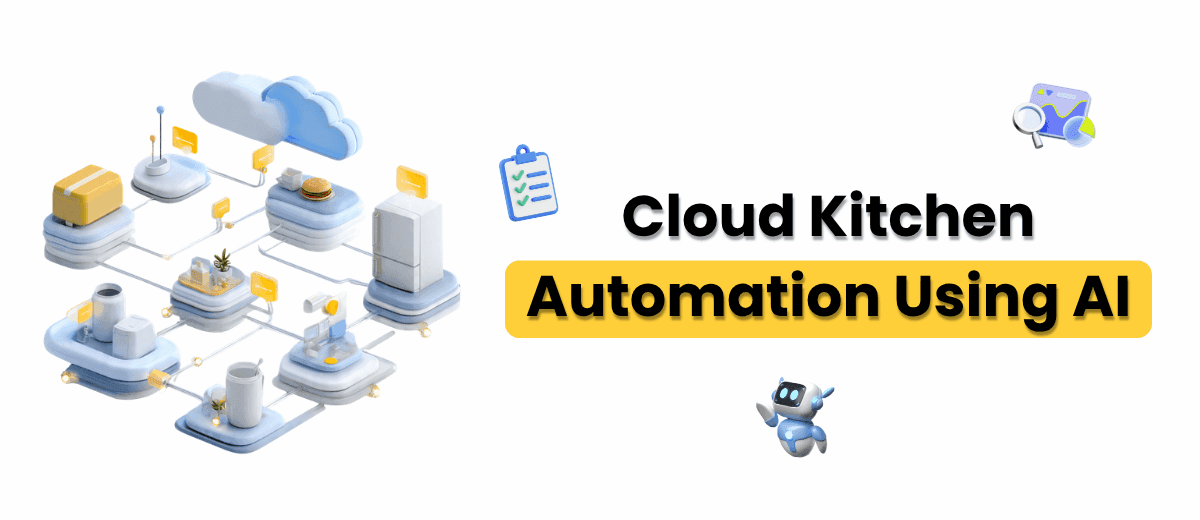
In this blog, let's have a real conversation about how AI is transforming cloud kitchens, why it matters for business owners, and how companies like Bombay Software's AI integration solutions are helping businesses unlock intelligent automation.
What Is a Cloud Kitchen?
A cloud kitchen (also known as a ghost kitchen or dark kitchen) operates purely for online food delivery. There's no physical customer-facing outlet. Everything runs through apps like:
This model reduces overhead costs and increases scalability. But it also brings new challenges:
- Inventory mismanagement
- Food wastage
- Delivery delays
- Demand unpredictability
- Customer dissatisfaction
And this is where AI becomes a game-changer.
Why AI Is Perfect for Cloud Kitchens
Cloud kitchens are data-heavy businesses. Every order, every rating, every delivery time it's all data.
AI thrives on data.
When implemented correctly, AI can:
- Predict demand
- Optimize inventory
- Automate order processing
- Improve delivery routing
- Personalize customer experiences
In short, AI doesn't just automate tasks it makes smarter decisions.
1. AI-Powered Demand Forecasting
Let's say it's raining in Mumbai. What happens?
People order more comfort food.
Now imagine your system already knows this.
AI analyzes:
- Weather data
- Past order history
- Time of day
- Festivals and holidays
- Local events
It predicts what customers are likely to order. So instead of guessing how many pizzas or biryanis to prepare, the kitchen prepares just enough.
Result?
- Less food waste
- Better preparation
- Faster service
Companies like Google Cloud AI offer predictive tools that are being widely used in supply chain and food tech systems.
2. Smart Inventory Management
One of the biggest problems in cloud kitchens is inventory mismatch.
Too much stock? You lose money.
Too little stock? You lose customers.
AI tracks:
- Ingredient usage trends
- Spoilage rates
- Supplier performance
- Order patterns
It automatically suggests reorder levels and even places automated purchase requests.
This kind of automation prevents last-minute chaos and improves operational efficiency.
3. Automated Order Management
When hundreds of orders are coming in simultaneously from multiple platforms, things can get messy.
AI-based systems:
- Consolidate orders from different apps
- Prioritize preparation based on delivery time
- Assign cooking tasks dynamically
- Reduce human error
Instead of a manual supervisor juggling tickets, AI handles workflow intelligently.
4. AI-Based Menu Optimization
Here's something interesting.
Did you know that sometimes removing items from your menu increases revenue?
AI analyzes:
- Best-selling items
- Low-performing dishes
- Profit margins
- Customer ratings
It identifies:
- Which dishes to promote
- Which ones to remove
- Which ones to bundle
- Dynamic pricing opportunities
This isn't guesswork. It's data-driven decision-making.
5. Delivery Route Optimization
Delivery delays are one of the top reasons for negative reviews.
AI helps by:
- Optimizing delivery routes
- Factoring traffic conditions
- Adjusting for real-time congestion
- Predicting accurate delivery times
This leads to:
- Faster deliveries
- Lower fuel costs
- Higher customer satisfaction
It's smart logistics powered by AI.
6. Personalized Customer Experience
Customers love personalization.
AI tracks:
- Past orders
- Preferences
- Dietary restrictions
- Spending habits
Based on this, it:
- Recommends meals
- Sends targeted offers
- Suggests add-ons
- Creates loyalty programs
This is similar to how Netflix recommends movies except here, it's recommending your next burger.
7. Voice & Chatbot Ordering
Imagine a customer saying:
"Order my usual dinner."
AI-powered chatbots recognize:
- The user
- Previous order
- Preferred payment method
Order placed in seconds.
This level of automation improves convenience and increases repeat orders.
8. AI in Food Quality Control
Food consistency matters.
AI-powered cameras and computer vision systems:
- Monitor food presentation
- Detect portion inconsistencies
- Flag hygiene issues
- Ensure standardization
This reduces dependency on manual supervision and maintains brand quality across multiple locations.
9. Energy Optimization & Cost Reduction
Electricity bills are a major operational cost.
AI systems monitor:
- Appliance usage
- Peak power hours
- Cooling system efficiency
They adjust energy consumption intelligently.
Over time, this leads to significant cost savings.
One Important Factor: Cybersecurity in AI-Powered Kitchens
Now let's talk about something critical.
When you integrate AI into cloud kitchens, you are dealing with:
- Customer data
- Payment information
- Supplier details
- Business analytics
This makes cybersecurity extremely important.
Without strong cybersecurity measures:
- Customer data can be leaked
- Payment systems can be compromised
- AI models can be manipulated
- Business reputation can suffer
AI systems must be built with cybersecurity at the core.
From encrypted payment gateways to secure cloud storage and protected APIs — cybersecurity is not optional. It's foundational.
When cloud kitchens adopt AI automation, they must ensure:
- Secure data pipelines
- Encrypted databases
- Role-based access control
- Regular security audits
AI without cybersecurity is like a smart kitchen with no locks.
How Bombay Software Is Building AI-Driven Solutions
Companies like Bombay Software are actively working in the artificial intelligence space, helping businesses implement AI across mobile apps and enterprise platforms.
Through their expertise in AI integration, they:
- Develop predictive analytics systems
- Build AI-powered automation tools
- Create intelligent dashboards
- Integrate AI into food-tech mobile apps
- Focus on secure AI architecture with strong cybersecurity measures
Their work in AI integration for mobile applications ensures businesses can scale efficiently while maintaining high data protection standards.
Real Business Benefits of AI in Cloud Kitchens
Let's simplify it.
When AI is implemented properly, cloud kitchens see:
- 20–30% reduction in food waste
- Faster order processing
- Improved customer retention
- Better inventory turnover
- Lower operational costs
- Stronger cybersecurity frameworks
And most importantly better profits.
Is AI Expensive for Small Cloud Kitchens?
This is the question many founders ask.
The truth?
AI used to be expensive.
But today:
- Cloud-based AI services are affordable
- API integrations are flexible
- SaaS models reduce upfront cost
Even small kitchens can start with:
- AI demand prediction
- Inventory alerts
- Basic chatbot ordering
Then scale gradually.
AI adoption is no longer limited to big brands.
The Future: Fully Autonomous Cloud Kitchens?
We are already seeing robotic cooking systems and AI-controlled kitchens in pilot stages.
Companies are experimenting with:
- Robotic chefs
- Automated packing systems
- Smart cooking timers
- Zero-human intervention kitchens
The future is not about replacing humans it's about augmenting human efficiency.
AI handles repetitive tasks.
Humans focus on creativity and strategy.
Final Thoughts
Cloud kitchens are built on efficiency.
AI is built on intelligence.
When the two combine, something powerful happens.
- Smarter forecasting
- Better decision-making
- Stronger cybersecurity
- Higher profits
- Improved customer experience
If you are running or planning a cloud kitchen, AI is not just a trend it's becoming a necessity.
The question is no longer "Should we adopt AI?"
The real question is "How soon can we implement it securely?"
Because in today's competitive food-tech market, intelligence wins.