If you’ve ever worn a smartwatch to track your steps, sleep, or heart rate, then congratulations you’re already part of the wearable revolution.
Now imagine pairing that wearable with an AI personal trainer that knows your strengths, weaknesses, and habits better than any gym coach ever could. That’s exactly what’s happening today at the intersection of wearables and AI-powered fitness apps.
The fusion of these two worlds is creating a personalized fitness ecosystem that feels futuristic, but it’s already very real.
Let’s break it down in a conversational way so that you truly get why wearables matter, how AI fitness apps use them, and what this means for the future of health and fitness.
So, What Exactly Are Wearables?
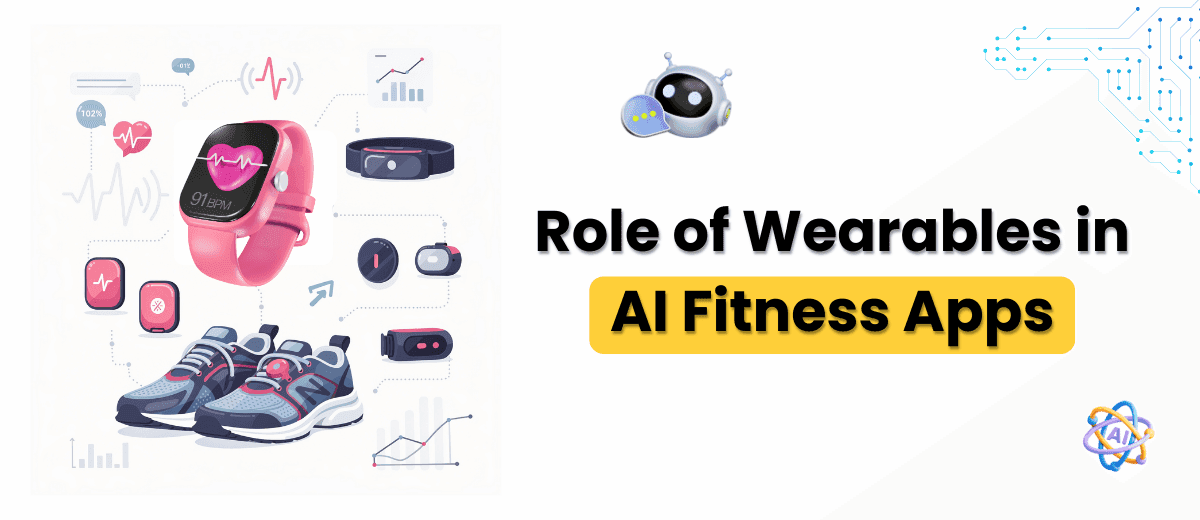
Wearables are devices designed to be worn on your body simple enough. But in the fitness space, we’re mostly talking about:
- Smartwatches
- Fitness bands
- Smart rings
- Smart clothing (yes, that’s a thing now)
- Head-mounted sports displays
These aren’t just gadgets for counting steps anymore. They collect real-time health metrics such as:
- Heart rate
- Heart rate variability (HRV)
- Sleep patterns
- VO2 max
- Blood oxygen levels (SpO2)
- Calories burned
- Stress measurements
- Posture & movement tracking
- Workout intensity + duration
That’s a lot of data that AI fitness apps can use in powerful ways.
AI Fitness Apps: More Than Just Digital Gym Logbooks
Traditional fitness apps used to just record your workouts. But AI fitness apps? Totally different ball game.
Today’s apps:
- Analyze your health and performance data
- Offer adaptive workout plans
- Track injury risk
- Suggest rest or active recovery
- Monitor nutrition balance
- Adjust training in real time
The star of the show here is the AI personal trainer an algorithm-driven fitness companion that makes coaching truly personalized.
If you're curious about how AI is being integrated into modern mobile applications in general, this article on AI integration in mobile apps is a helpful read just check it out through this internally linked resource: This gives a bit of perspective on how AI trainers became possible in the first place.
The Magic Happens When Wearables + AI Work Together
Wearables give the data. AI interprets the data. Together, they create a synergy that improves your workouts, recovery, and everyday health decisions.
Let’s look at how this works in practice:
1. Real-Time Performance Analysis
While you're jogging or lifting weights, your wearable is collecting heart rate, calories burned, movement patterns, and workout intensity.
Now picture your AI personal trainer jumping in and saying:
“You’re hitting Zone 4 cardio slow down for optimal fat burn.”
or
“Your heart rate recovery after that set was slower than usual. Take an extra 30 sec rest.”
That’s real-time guidance, not after-the-fact stats.
2. Hyper-Personalized Workout Plans
This is where most fitness apps used to fall flat.
Previously:
Everyone got the same 30-day abs workout plan. Meh.
Today:
- Workout plans change based on:
- Your sleep quality
- Your recovery score
- Yesterday’s stress level
- Current injury risk
- Muscle fatigue detection
For example, if your wearable detects poor sleep and high resting heart rate, the AI app might recommend yoga instead of HIIT.
3. Tracking Long-Term Health Trends
Wearables collect data daily, weekly, monthly, even yearly.
AI uses this data to identify patterns like:
- Consistent low sleep quality → increase cortisol levels
- Higher blood oxygen after running → improved VO2 max
- Decreasing resting heart rate → stronger cardiovascular health
This kind of long-term insight is something humans can’t do easily on their own without data visualization and prediction algorithms.
4. Motivation & Mindset Coaching
We all know motivation fluctuates. Some days you're ready to conquer the world, other days your couch is the winner.
Wearables + AI help by:
- Sending reminders
- Celebrating milestones
- Gamifying fitness
- Nudging you when you're inactive
Research shows that gamification encourages healthier behavior. Even the World Health Organization (WHO) talks about the importance of physical activity and technology’s role in promoting it check out this external supporting context: WHO - Physical Activity Guidelines
When global health agencies recognize the impact of technology in health, it's not just hype.
The Role of AI Personal Trainer in Injury Prevention
Fitness isn’t just about pushing hard—it's about pushing smart.
Wearables detect early signs of fatigue or injury from metrics such as:
- Increased HRV variability
- Elevated resting heart rate
- Reduced sleep quality
- Slower muscle recovery
- Reduced grip strength (yes, wearables can track this too)
AI connects the dots. It might say:
“Skip leg day today, your lower body strain score is high.”
Or…
“You need hydration, your HRV and temperature suggest fatigue.”
Small interventions like these prevent bigger problems like muscle tears or overtraining.
Sleep Tracking = The Underrated Fitness Multiplier
Fitness culture used to glorify “No Pain No Gain.”
Now it’s shifting towards “Train, Recover, Repeat.”
Wearables analyze sleep cycles: REM, deep, and light sleep. AI then interprets it:
- Poor deep sleep → poor muscle recovery
- Low REM → cognitive fatigue
- High resting HR → stress or illness
Apps like WHOOP and Fitbit already score your sleep and recovery.
When your sleep score is low, your AI personal trainer adjusts your workout intensity automatically.
That’s basically having a coach who watches you sleep (in a non-creepy way).
Nutrition + Wearables + AI = The Next Big Thing
We’re now seeing wearables integrate glucose monitors, hydration sensors, and metabolism trackers.
Imagine this scenario:
- You eat pasta
- Your glucose spikes
- Wearable records elevated levels
- AI suggests low-glycemic meals tomorrow
This isn’t sci-fi. It’s already happening through devices like continuous glucose monitors (CGMs).
Check out this external resource that breaks down how CGMs work: Harvard Medical School – CGM Overview
When nutrition + fitness + recovery data sync together, results improve massively.
So, Why Are Wearables So Important for AI Fitness Apps?
To summarize the benefits:
1. Wearables Provide Accurate Data
AI is only as good as the data fed into it. Wearables offer:
- Objective measurements
- Continuous updates
- Multi-channel inputs
2. They Enable Personalization
- Personalization = better results + higher engagement.
- People stick to plans that feel tailored to them.
3. They Make Fitness Scalable
- Human trainers can manage maybe 20–30 clients.
- AI trainers can manage millions accurately 24/7.
4. They Support Preventive Healthcare
Tracking metrics early prevents:
- Heart issues
- Overtraining injuries
- Mental burnout
5. They Improve User Accountability
When your watch reminds you to stand up, stretch, hydrate, breathe it's doing micro-coaching all day long.
The Future of Wearables & AI Fitness: What’s Next?
The tech space is evolving fast. Expect innovations like:
1. Smart Gym Equipment
Machines will auto-adjust weights and measure form.
2. AI Motion Coaching via Cameras
Your phone camera will correct your squat form in real time.
3. Biomarker Wearables
Sweat sensors analyzing:
- Hydration
- Electrolytes
- Hormones
4. Mental Health Integration
AI detecting anxiety & stress from HRV + breathing.
5. Predictive Disease Prevention
Early detection of:
- Arrhythmia
- Sleep apnea
- Metabolic disorders
The future of wellness is no longer reactive, it’s predictive.
Final Thoughts
Wearables and AI fitness apps are changing the entire fitness landscape.
We’re moving from generic health recommendations to:
- Data-driven
- Adaptive
- Personalized
- Always-on
- Preventive
The AI personal trainer is no longer a futuristic idea, it’s your smartwatch and fitness app working together to help you live smarter, healthier, and stronger.
So the next time you close those activity rings or get nudged to walk, remember there’s a whole ecosystem of intelligence behind that tiny vibration on your wrist.
Build Smarter AI Fitness Apps
Leverage AI and wearable technology to deliver real-time insights, personalised workouts, and data-driven fitness experiences.
Explore AI Development Services